SimuNPS
KeLiang Assists in China’s First Back-to-Back DC Asynchronous Grid Connection Project
With the development and commissioning of hydropower in western Yunnan Province, the main power transmission grid for the west-to-east power transmission in the Southern Power Grid during the 12th Five-Year Plan period will form a configuration of eight AC and eight DC lines. The transmission distance between the eastern and western AC grids is increasing, and the grid structure with hybrid AC/DC operation is becoming more complex. Implementing asynchronous grid interconnection between Yunnan Grid and the Southern Power Grid can effectively mitigate grid security and stability issues caused by AC/DC power transfer, thereby improving power supply reliability.
Overview
With the development and commissioning of hydropower in western Yunnan Province, the main power transmission grid for the west-to-east power transmission in the Southern Power Grid during the 12th Five-Year Plan period will form a configuration of eight AC and eight DC lines. The transmission distance between the eastern and western AC grids is increasing, and the grid structure with hybrid AC/DC operation is becoming more complex. Implementing asynchronous grid interconnection between Yunnan Grid and the Southern Power Grid can effectively mitigate grid security and stability issues caused by AC/DC power transfer, thereby improving power supply reliability.
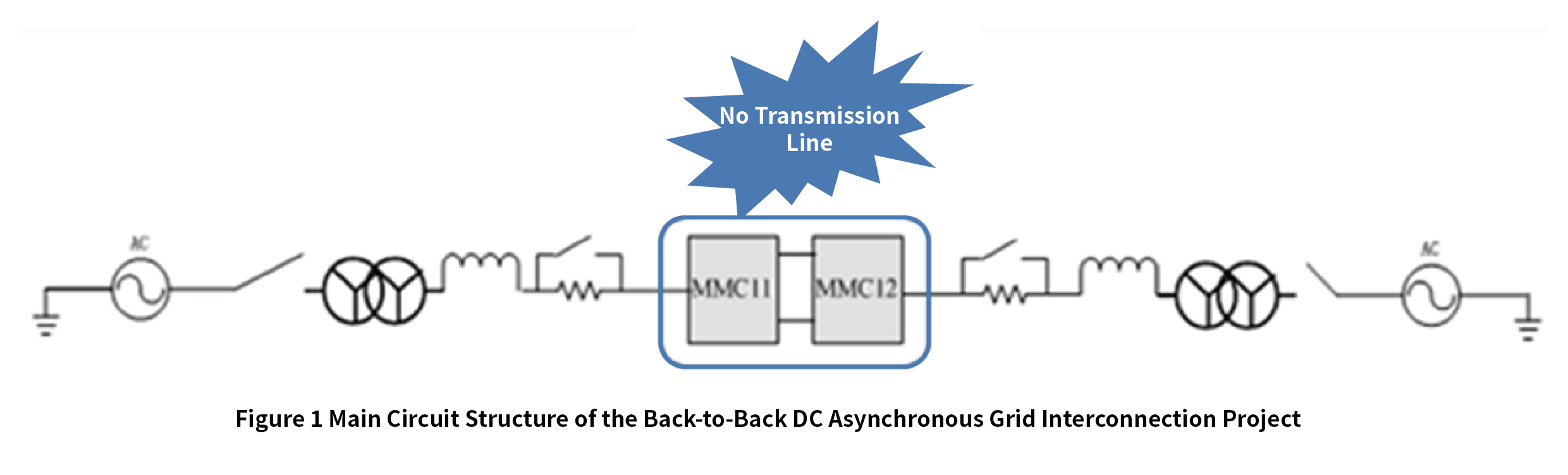
The construction of the Luxi back-to-back DC asynchronous grid interconnection project between Yunnan Grid and the main Southern Power Grid is particularly important. However, the challenges and technical difficulties of such a critical project are considerable. The project requires that simulation models match the topology of the actual project's main circuit, with no DC cables added in the simulation model. Each terminal requires 335 × 6 and 468 × 6 submodules to be simulated in a single core, which will consume significant simulation resources.
Solutions
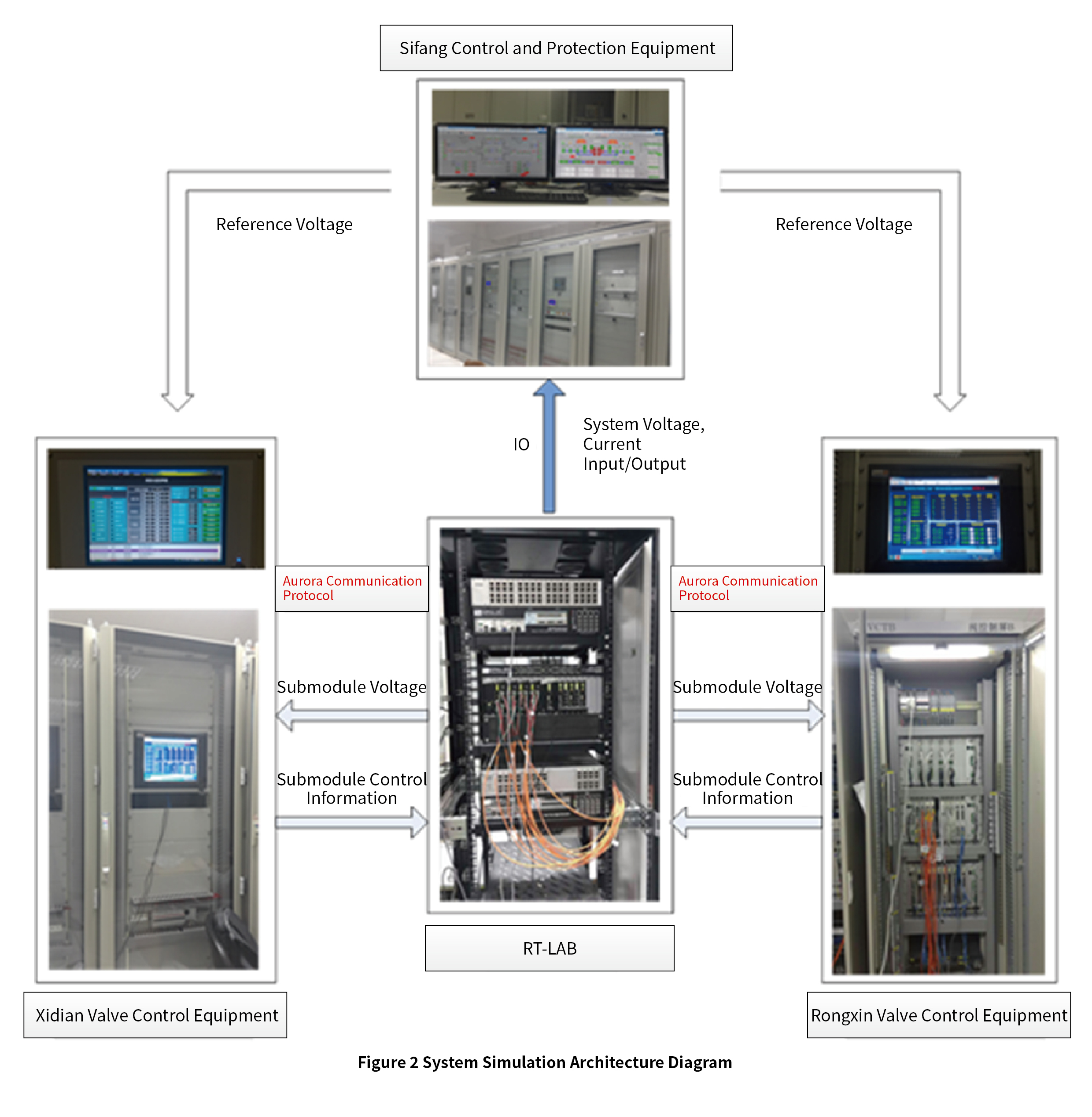
To meet the simulation requirements for the main circuit topology of the actual project, KeLiang has achieved a technical capability of simulating up to 1,024 submodules per arm in series. The solution provided by KeLiang employs two FPGA-based simulation units to simulate the MMC valves of the Yunnan Station and Guangxi Station respectively, while CPU-based simulation equipment simulates the AC/DC grid. An IO chassis simulates all analog and digital signals of both stations. The project adopts a dual-channel Aurora protocol communication method. The successful application of this approach provides a technical solution for future higher-level MMC testing. The solution also includes 32 sets of surge arresters at both ends, capable of simulating on-site surge arrester operations. Additionally, the solution utilizes an SSN decoupling algorithm to simulate severe faults across all valves.