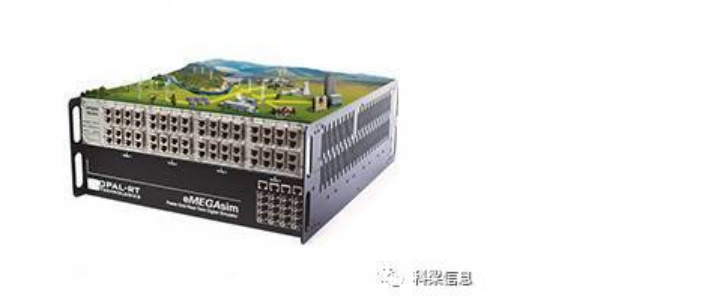
The real-time grid simulator (RTNS) at Newcastle University's Smart Grid Laboratory utilizes models capable of interacting with the actual lab environment to conduct comprehensive realtime simulations of power grids. After integrating Triphase power amplifiers, the research methodology shifted directly from traditional HIL to PHIL (PowerHardwareintheLoop). The realtime grid simulation model can be linked via a digital interface to a threephase fourquadrant variable frequency drive capable of delivering controllable voltage waveforms and timing signals. This enables interaction between real lowvoltage grid equipment under test and the largescale grid model simulated by the realtime grid simulator, making it possible to conduct complex studies on various capabilities of future grid technologies.
The Smart Grid Laboratory and Energy Storage Test Facility at Newcastle University are distinguished by their ability to perform indepth research on future energy systems. The laboratory and test facility project is jointly funded by the Engineering and Physical Sciences Research Council (EPSRC), Newcastle University, and industrial partners—Northern Powergrid and Siemens. As a key institution and flagship research center of Newcastle University, the laboratory brings together academia, utilities, communities, business, and industry to form a research hub focused on urban innovation and sustainable development.
The aim of the research facility is to develop an intelligent, sustainable, and resilient ecosystem prototype that integrates urban energy, transport, and digital infrastructure. The Smart Grid Laboratory at Newcastle University focuses on the study of distribution networks in future scenarios, including the integration of proliferating electric vehicles and new energy generators.
1.1 Closing the Loop Between Hardware and the Power System
The laboratory setup must meet the requirements for power system simulation. “We need to connect power electronic converters, electric vehicles, battery systems, smart devices, and other real equipment in the laboratory with a realtime simulated power system. We want to bridge the gap between simulation and experimentation by closing the loop between hardware and the power system in a smart grid environment,” said Dr. Charalampos Patsios, a researcher in Power Electronics Engineering at Newcastle University.

1.2 Simulation Based on RealTime and Archived Data
Researchers at the Smart Grid Laboratory are able to obtain real data from local grid operators. They intend to import these data into the laboratory to perform realtime simulations of power system operation under different scenarios.
“We import realtime data generated by local UK distribution network operators into the laboratory to use them as inputs for scalable, configurable grid models and other simulated systems. For example, we can test the operation of a real battery system using realtime power flow data from an actual substation in Newcastle to perform peakshaving or other services. Similarly, we can use realtime voltage, current, and rating data to study the impact of increased renewable penetration on the grid.”
Not only realtime data, but archived data are also highly valuable. Researchers at Newcastle University possess extensive archived smart meter data and experimental data from smart grid trials across the UK. They aim to use these data in a range of scenarios for hardwareintheloop experiments in power systems to examine interactions between the power system and real hardware.
The RTLABbased active distribution network solution enables researchers at Newcastle University to model various systems and capture useful variables such as voltage, current, and power flow. Using the simulator, they can also study interactions and dependencies among different subsystems and components in real time.
The solution also allows researchers to scale up study cases, enabling the modeling of more complex grids. For safety reasons, the laboratory operating voltage cannot exceed 400 V. Now, by simulating higher voltages, safe research can be conducted while also reproducing relevant phenomena. With the RTLAB realtime simulation platform, researchers can simulate higher voltages and power flows and then scale them down to voltage or power levels that are easier to manage and control in the laboratory.
“We want to reduce the risk of experiments involving highpower, highvoltage grids,” said Martin Feeney, head of the Smart Grid Laboratory. “Therefore, we need to simulate them in real time and scale them down to voltages manageable in the lab. Now we are finally able to perform realtime simulations of power systems that include real hardware and separately capture different quantities such as current, voltage, and power flow.”
2.1 Smart Grid Laboratory
The realtime grid simulator (RTNS) at Newcastle University's Smart Grid Laboratory utilizes models capable of interacting with the actual lab environment to conduct comprehensive realtime simulations of power grids. In addition to OPALRT’s OP5600 realtime simulator, the laboratory is equipped with a Triphase power amplifier for powerhardwareintheloop testing. The realtime grid simulation model can be linked via a digital interface to a threephase fourquadrant variable frequency drive capable of delivering controllable voltage waveforms and events. This setup provides a PowerHardwareintheLoop (PHIL) platform, facilitating interaction between real lowvoltage grid equipment under test and the largescale grid model simulated by the realtime grid simulator, thereby enabling complex studies of future grid technology capabilities.

2.2 Energy Storage Platform
The facility can also interface with other electrical energy storage technologies under a range of technical specifications, and even simulate various technologies via dedicated battery emulators. Using this realtime grid simulator (RTNS), the facility can be connected not only to the real grid, but also to a simulated grid in a nearly realistic manner.
As summarized by Dr. Charalampos Patsios, the RTLABbased realtime simulation test solution not only meets technical specifications but also overcomes the following practical constraints:
Timeline: We have a strict timeframe for setting up experimental equipment.
Budget: Our budget for building the experimental setup is limited, and this also constrains our decisions.
Another challenge was the desire for a flexible and open system that could seamlessly interface with different thirdparty software and hardware solutions. Therefore, flexibility was also a requirement.
The Smart Grid Laboratory deals with simulations of lowcarbon technologies, load simulation, electric vehicles, energy storage, and flexible lowvoltage grids achieved through powerhardwareintheloop simulation in future smart grids.
Researchers will be able to evaluate new grid technologies in more challenging future scenarios, where power systems will become even more critical to the operation of our energy systems. Realtime simulation will help them understand how smart grids can help address future energy challenges.
“In the field of power systems, there is a growing need for accurate, fast, flexible, and reliable models of real systems and their operation. This stems from the increasing scale and complexity of these systems and the continuous evolution of technologies surrounding them. To design, prototype, and test different solutions, build confidence around them, and ensure that they are innovative, longlasting, and sustainable, it is essential to narrow the gap between computer simulation and real systems,” said Dr. Haris Patsios of the School of Electrical and Electronic Engineering at Newcastle University.