Solutions
Planning
SuperPlan Energy Planning and Simulation Software
iEnergyLab-H2 Green Hydrogen System Planning and Design Optimization Software
Design
Large-Scale AC/DC Power Grid Simulation Analysis System
Rapid Control Prototype(RCP)
QuiKIS impedance scanning and stability analysis software
Construction
Automotive Power Supply Quality Testing System
Electric Drive Control Testing Solutions
Motor Controller Testing System
Battery Management System Hardware-in-the-Loop
Hardware-in-the-Loop (HIL) Testing
Power Hardware-in-the-Loop (PHIL) Testing
Simulation & Testing for the Entire Energy Storage System Industry Chain
Green Hydrogen Simulation and Testing System
MMC-HVDC simulation & testing system
Power industrial control vulnerability mining system
Relay Protection Device Simulation & Test System
Closed-loop Simulation & Testing System for Distribution Automation Terminals
AC/DC Microgrid Simulation & Testing System
DC Transformer Simulation & Testing
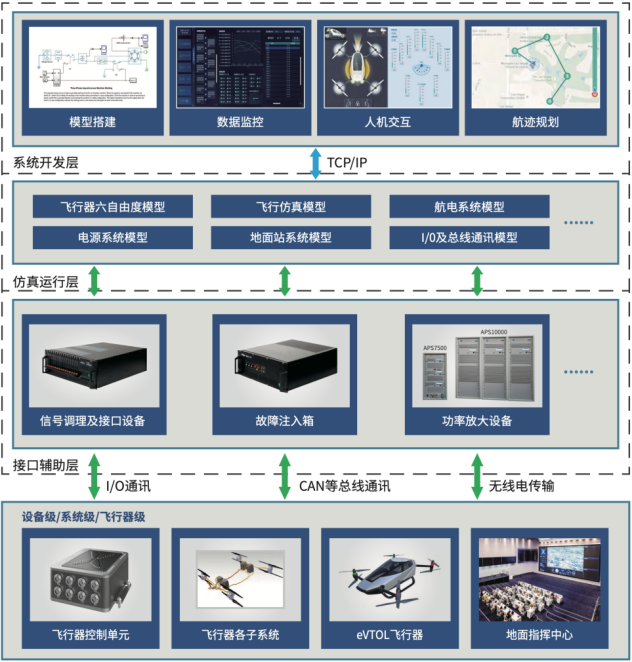
eVOTL Simulation & Verification System
Products
Modeling & Simulation Software
PowerFactory—Power System Simulation Software
New-type Power Systems Modeling and Simulation Software_SimuNPS
HYPERSIM Real-Time Digital Simulation for Large-Scale Power Systems
iEnergyModel Library
Green Hydrogen and Integrated Energy Models
Energy Storage System Models
Load and Charging Facility Models
Power grid equipment and transmission-distribution models
New Energy Power Generation and Power Equipment Models
Digital Hybrid Simulation
KL2800 Optical Storage Power Station Emulator
KL2900 Impedance Injection Tester
KL2910 Data Acquisition Unit
OP5600 Simulator
OP5700 Simulator
KL6000 Motor Emulator
PXI Ruggedized Testing and Simulation Platform
High-Dynamic Source Load Emulator
SP&S Power & Amplifier
COMPISO System Unit 200-1GAMP6
COMPISO System Unit 100-1GAMP4