Currently, with the rapid advancement of power electronics technologies in fields such as the IBR-dominated power system, new energy vehicles, and rail transit traction systems, higher requirements have been placed on the stability, reliability, and response speed of controllers/drives. However, real devices such as wind turbines, batteries, photovoltaic panels, and motors cannot effectively simulate operating scenarios under fault conditions, nor can they fully test and verify the control performance of device controllers.
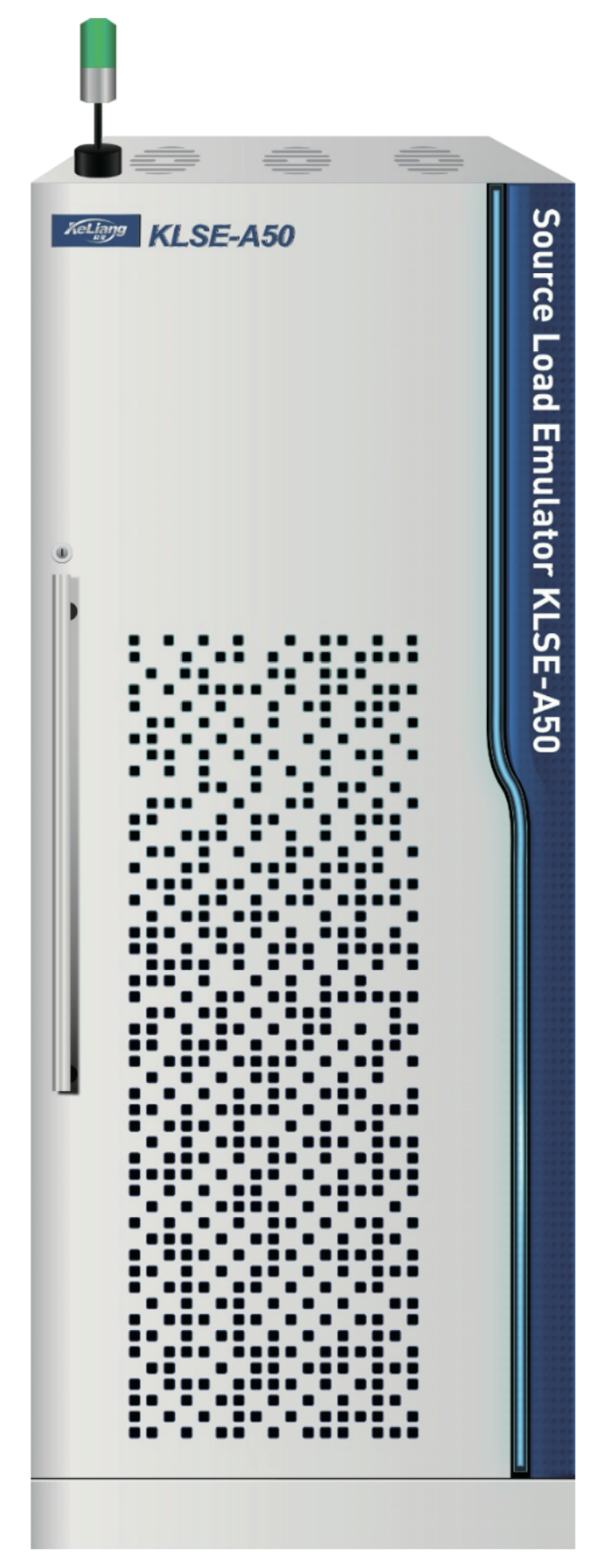
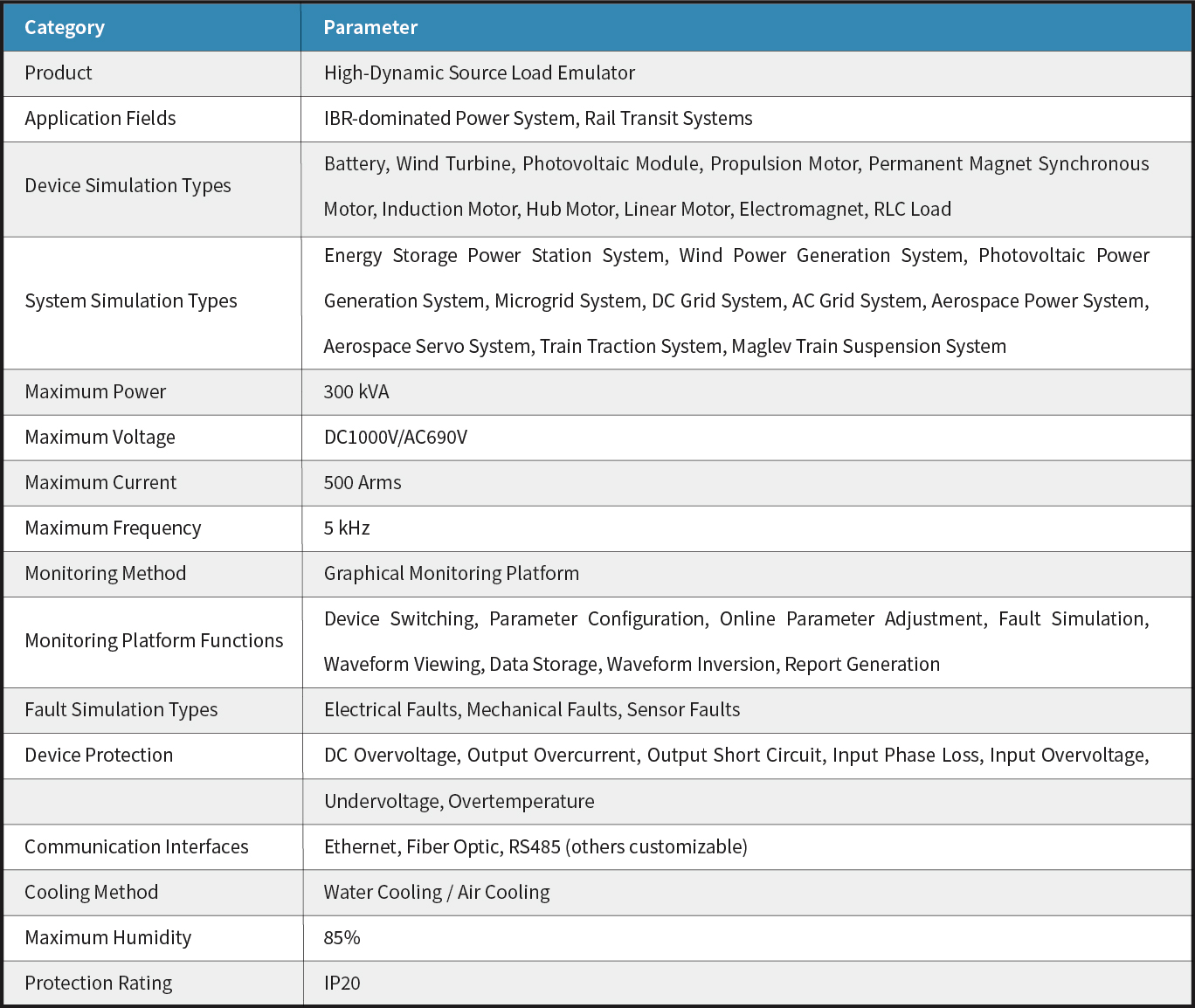
Based on testing demands in the market, KeLiang has developed a power equipment that meets the testing requirements of high-performance controllers—the High-Dynamic Source Load Emulator. This emulator can precisely replicate the high-dynamic characteristics of various devices, including wind turbines, batteries, photovoltaic panels, and motors, especially during startup, shutdown, and fault conditions, thereby fulfilling the comprehensive testing and verification needs of the entire control system. The High-Dynamic Source Load Emulator supports multiple operating modes such as standalone operation, parallel operation of multiple units, and joint operation with a simulator, accommodating complex testing scenarios for controllers at different stages and in different systems.

■IBR-dominated Power System: Energy storage power station systems, wind power generation systems, photovoltaic power generation systems, microgrid systems
■High-end Equipment Systems: Ship propulsion systems, aerospace servo systems
■Rail Transit Systems: New energy vehicle three-electric systems, train traction systems, maglev train suspension systems
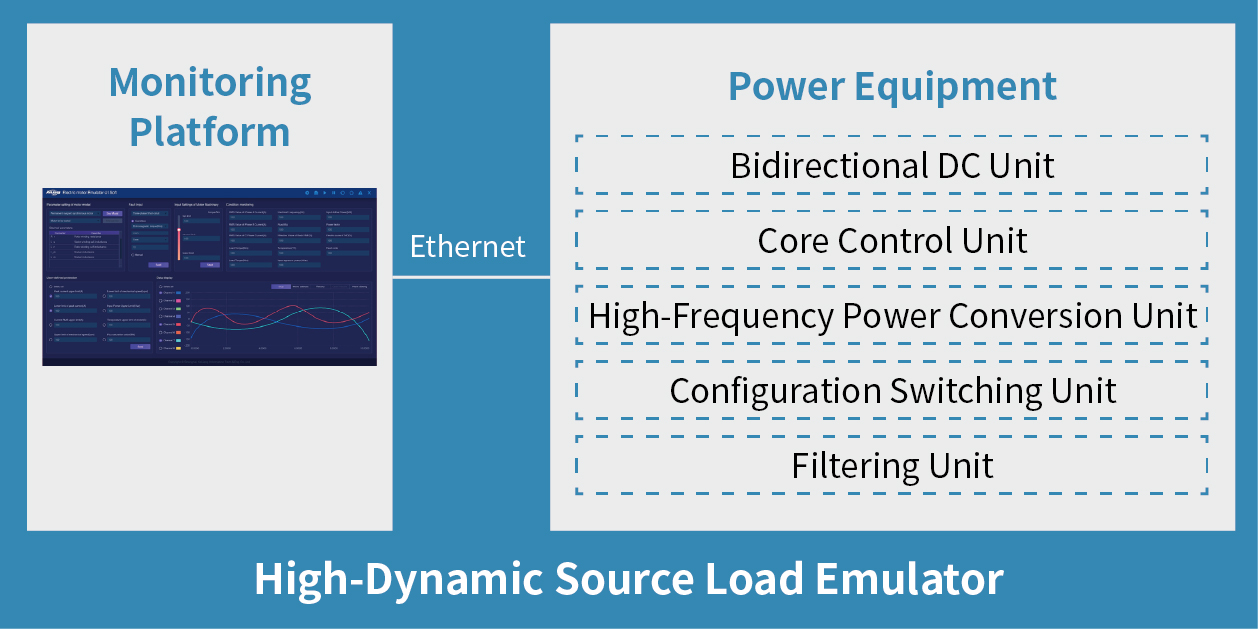
The High-Dynamic Source Load Emulator consists of a monitoring platform and power equipment, connected via Ethernet. The power equipment is mainly composed of a bidirectional DC unit, core control unit, high-frequency power conversion unit, configuration switching unit, filtering unit, etc. It features functions including device switching, parameter configuration, online parameter adjustment, fault simulation, waveform viewing, data storage, waveform inversion, and report generation.
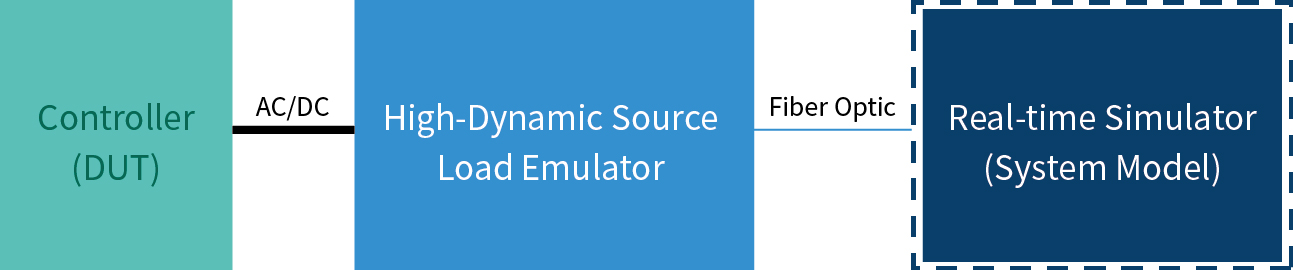
One end of the High-Dynamic Source Load Emulator is power-connected to the controller (Device Under Test, DUT), with the connection type—three-phase AC or DC—selected based on the actual device conditions. The other end is connected to the distribution network via the bidirectional DC unit, enabling bidirectional power flow. Depending on the test scenario, the High-Dynamic Source Load Emulator can also be optionally connected to a real-time simulator via fiber optic communication to jointly simulate complex power systems. The equipment connection principle is shown in the figure below.
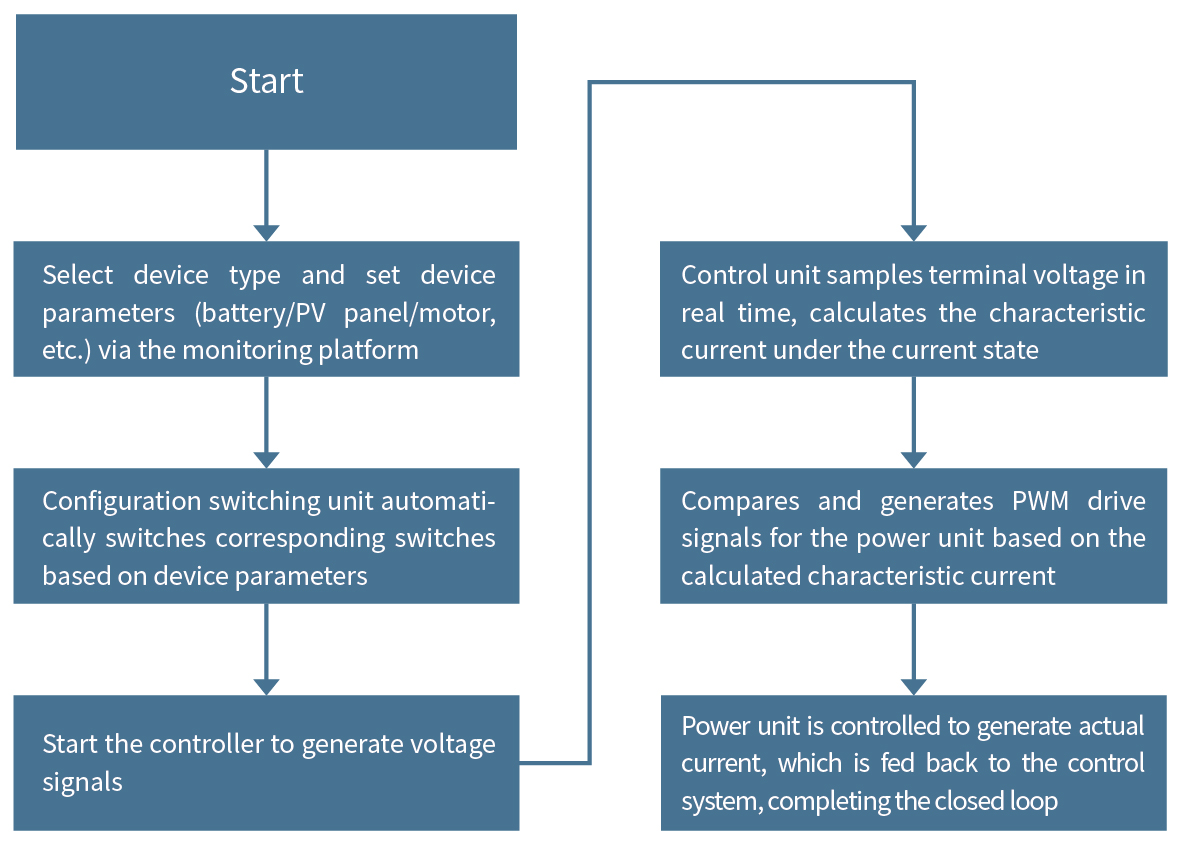
The core control unit includes a sampling module, calculation module, comparison module, protection module, and driving module. Based on the current device configuration parameters, it performs calculations and comparisons, outputs control drive signals, and through the power conversion unit and filtering unit, ultimately realizes the simulation of the electrical external characteristics of the entire high-dynamic source-load simulation device. The system operation principle flow chart is shown in the figure below.
■ Function Integration: One set of equipment replaces the drive motor, load motor, and load frequency converter in traditional complete motor test benches.
■ High Versatility: One set of equipment replaces various traditional source and load devices such as batteries, wind turbines, photovoltaic panels, motors, electromagnets, RLC loads, and nonlinear loads.
■ Wide Coverage: Supports routine testing, specific condition testing, and limit testing.
■ Fault Simulation: Electrical faults, mechanical faults, sensor faults.
■ Cost Savings: One device replaces multiple devices, avoiding redundant investments and saving space and labor implementation costs.
■ Strong Scalability: Supports series/parallel use of multiple units, supports communication with real-time simulators for system-level simulation.
■ Convenient Operation: Enables quick device switching, parameter configuration, online parameter adjustment, fault simulation, waveform viewing, data storage, waveform inversion, and report generation via the monitoring platform.
■ Good Grid Connectivity: Forms a power circulation loop with the DUT, low energy consumption, minimal power drawn from the grid.
■ High Safety: No rotating mechanical parts; users can customize voltage and current protection thresholds, which act ahead of DUT protection actions, ensuring the safety of the DUT.
Application 1: Source Load Simulation in IBR-dominated Power System
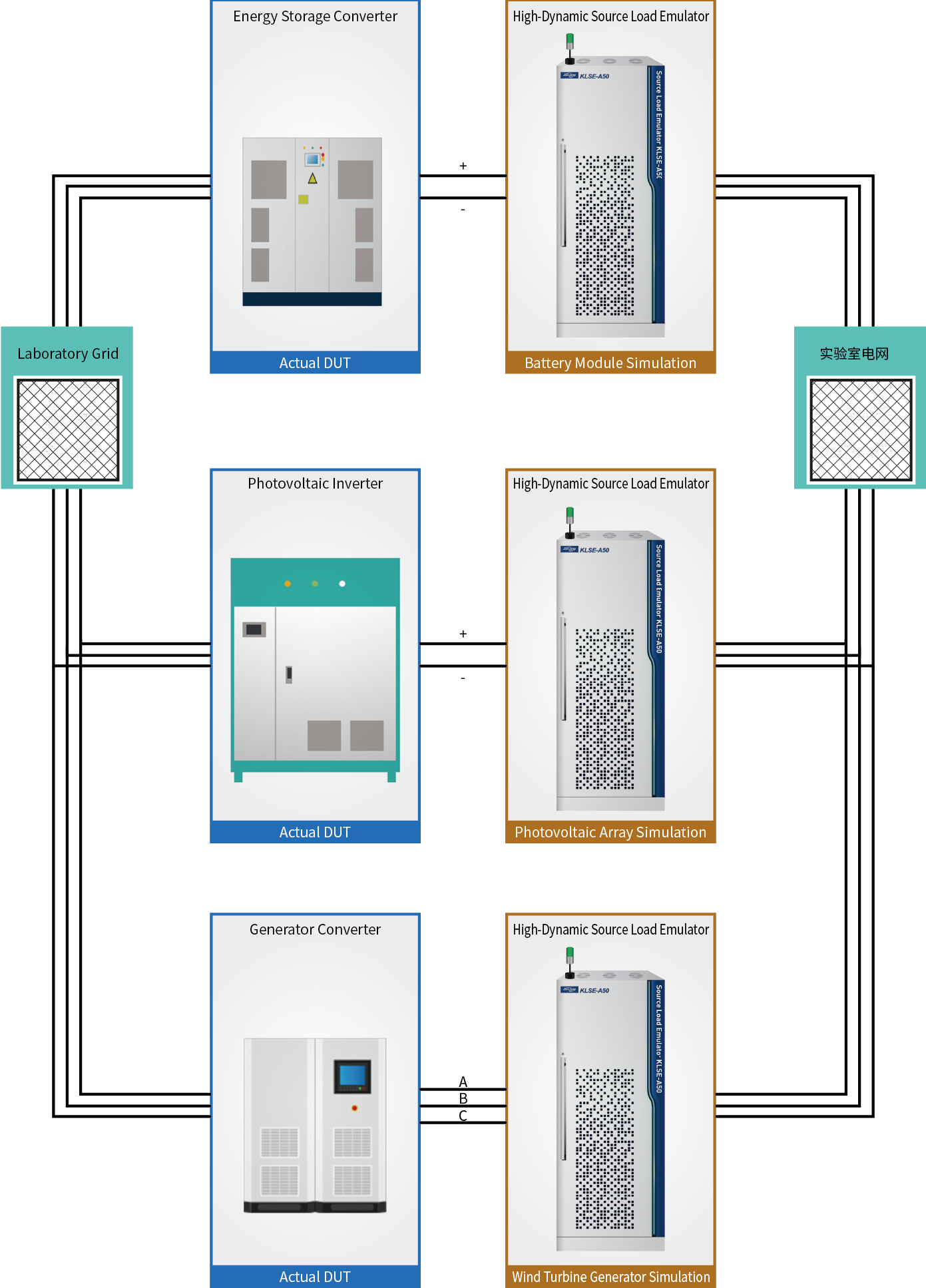
The High-Dynamic Source Load Emulator can quickly construct various power simulation devices such as battery modules, photovoltaic arrays, and wind turbine generators via settings on the monitoring platform. It is power-connected to the actual frequency converters/converters of the equipment to achieve power-level testing of the actual devices. The emulator supports DC or three-phase AC power connections on the device side and connects to the laboratory grid via three-phase AC ports on the grid side, enabling bidirectional power flow. It supports both single-device testing and networked testing of multiple devices.
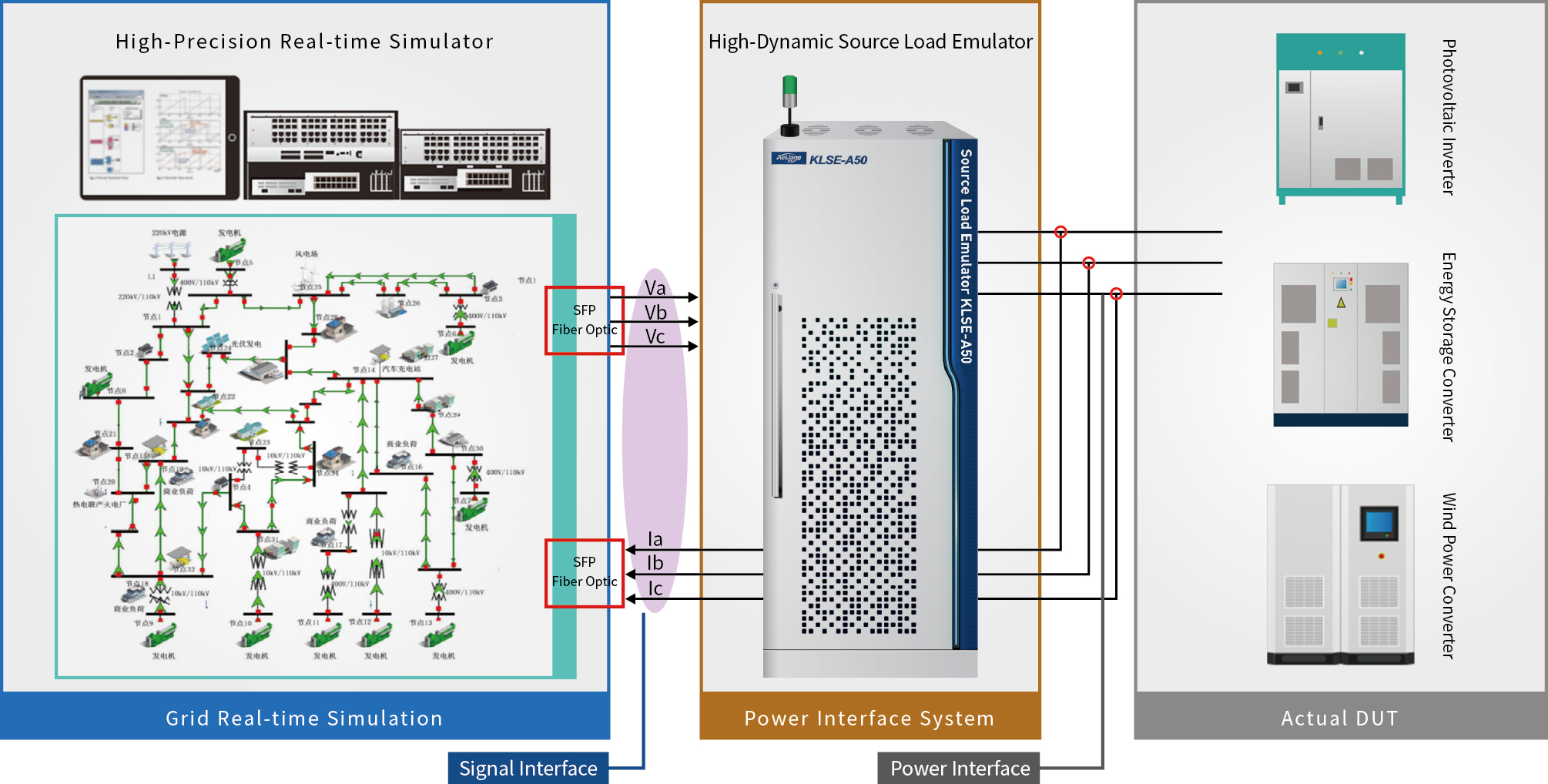
Application 2: IBR-dominated Power System Simulation Based on PHIL
A large power system network runs on a real-time simulator and is connected to devices such as photovoltaic inverters, energy storage converters, and wind power converters via the High-Dynamic Source Load Emulator. This enables simulation and testing of the grid-connection process and grid-connected operation status of these devices, facilitating control algorithm and system optimization design. The High-Dynamic Source Load Emulator acts as a power interface system, with one end communicating with the real-time simulator via fiber optic and the other end connected to the actual DUT via power cables, achieving high-speed conversion between digital signals and power signals.
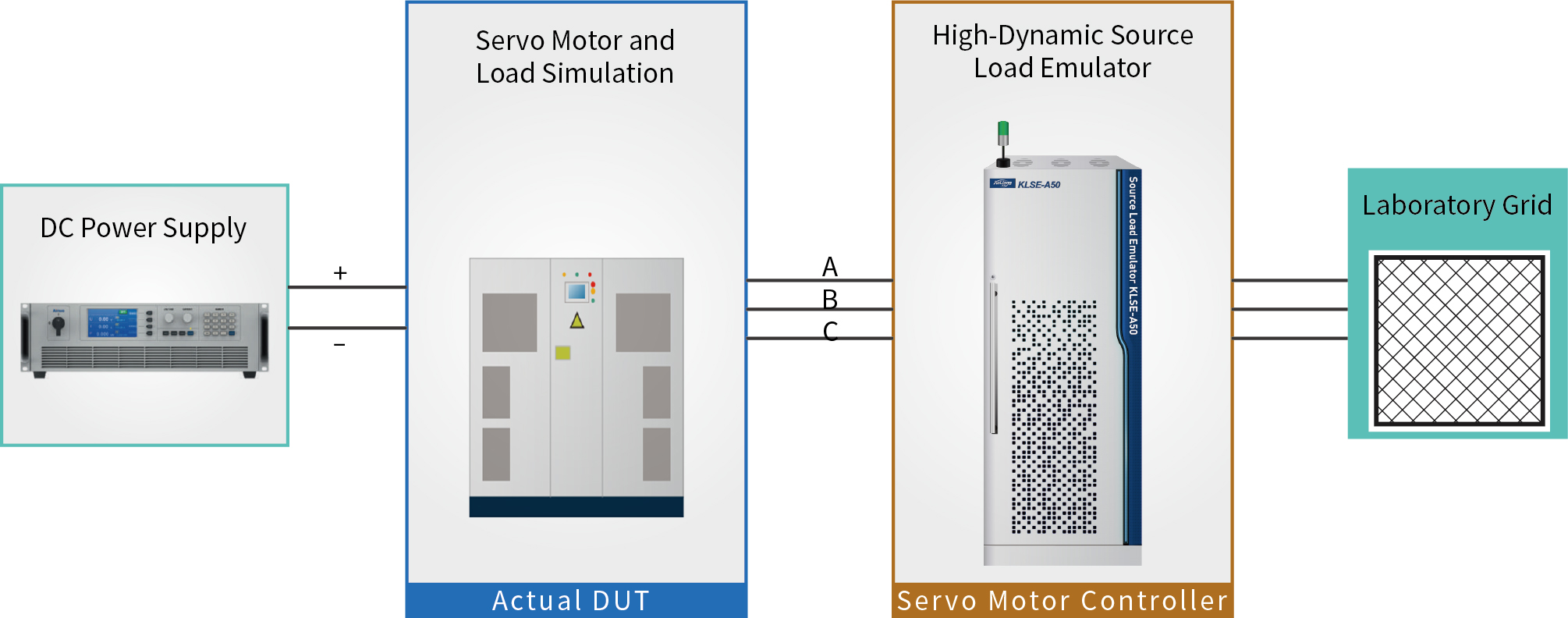
Application 3: Source Load Simulation in Special Equipment Systems
The High-Dynamic Source Load Emulator simulates servo motors and loads on armored vehicles and is power-connected to the servo motor controller to build a real power testing environment. It can simulate various faults such as increased friction torque, phase loss, and locked rotor, enabling comprehensive testing of the control functions and performance of the servo motor controller.